
Gaming the IELTS
There are 100 topics in the IELTS test of speaking and writing; these are organized into 10 main themes with specifically tailored vocabularies or lexicons provided free. They are House & Home, Art & Décor, School & Careers, Film & TV, Media & Technology, Family & Friends, Books & Music, Travel & Transportation, Health, Food & Sports, and Social Issues.
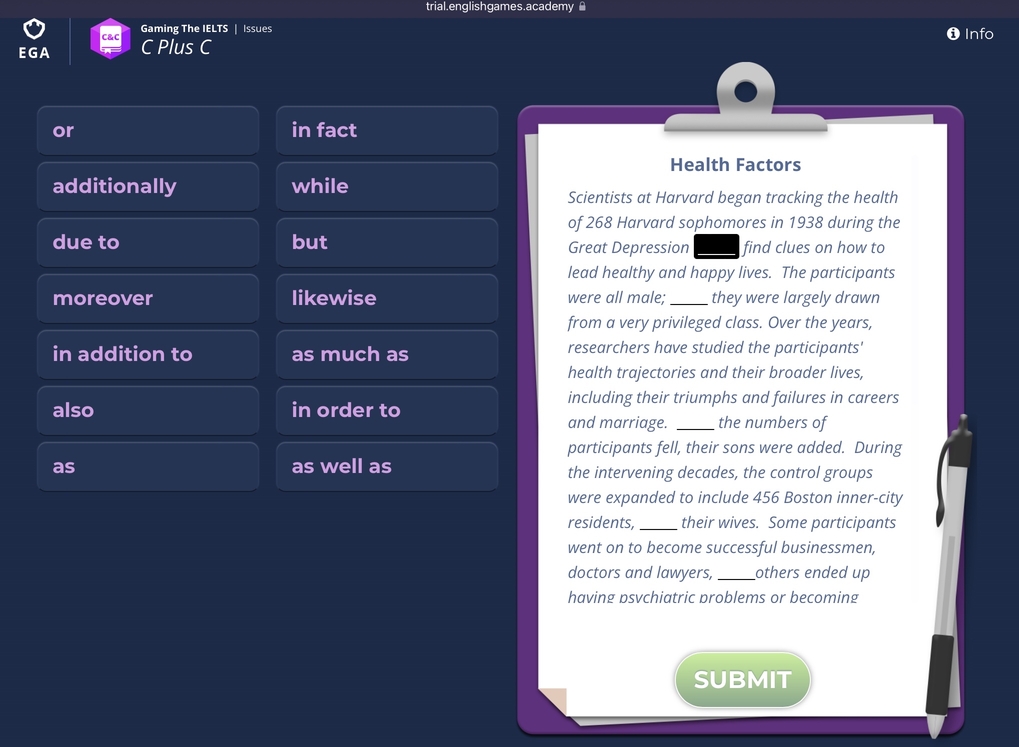
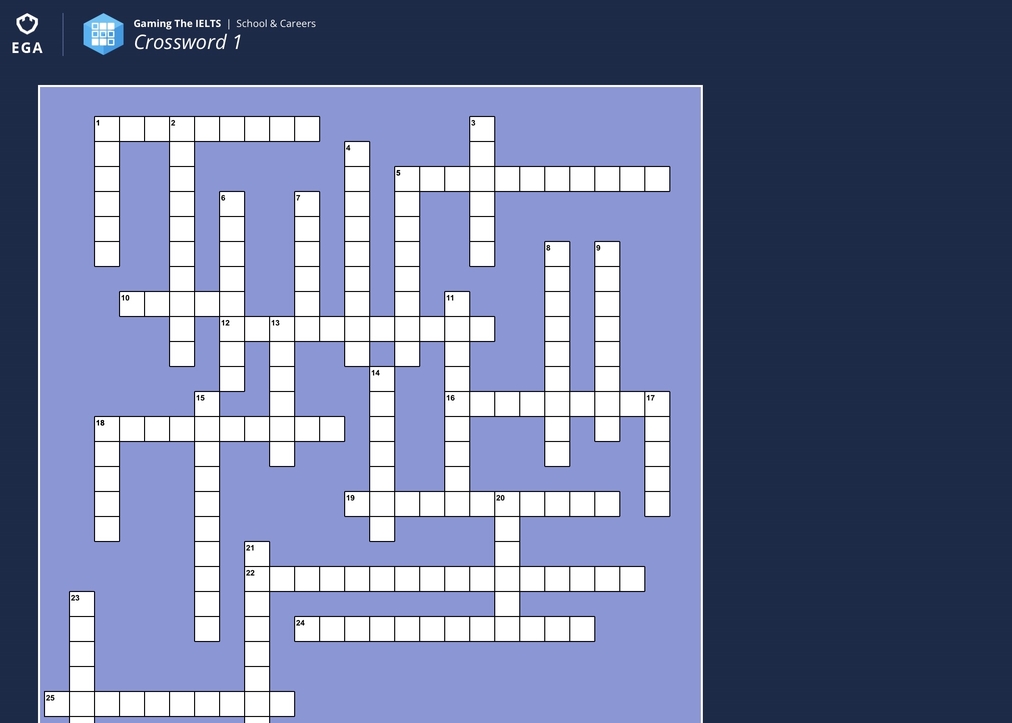
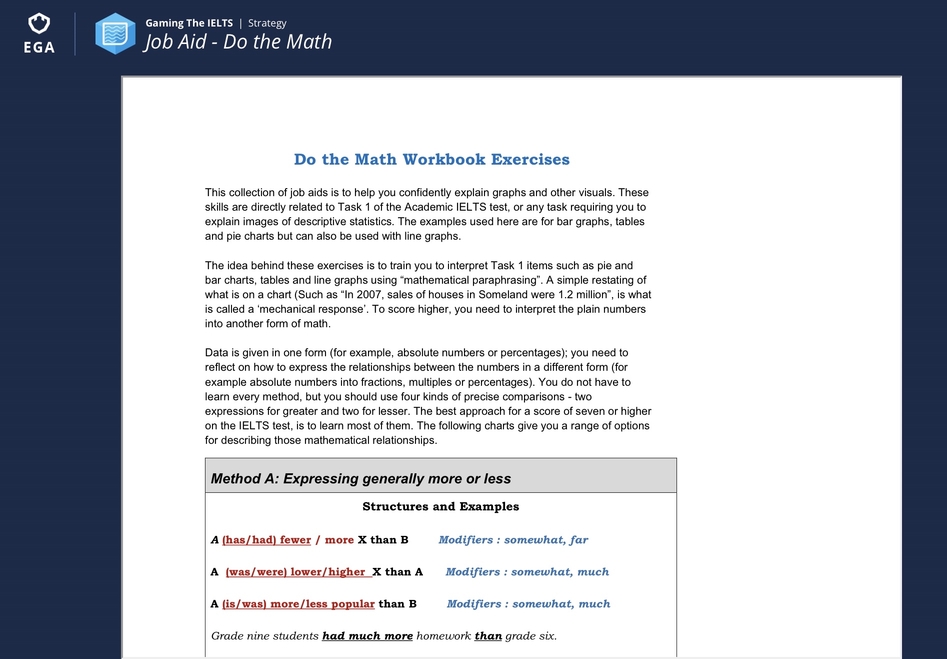
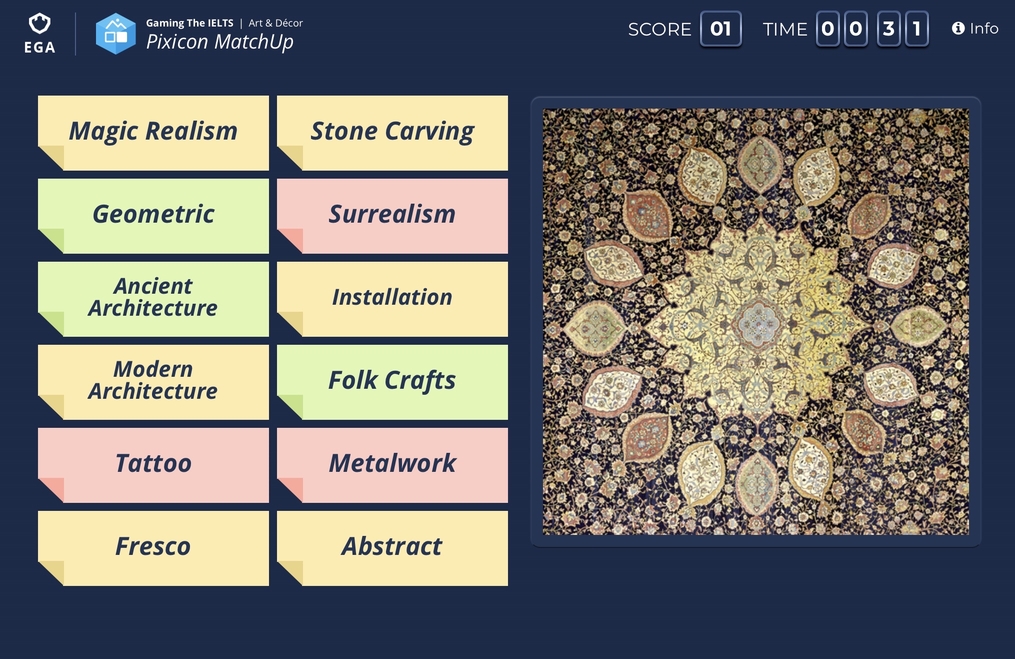
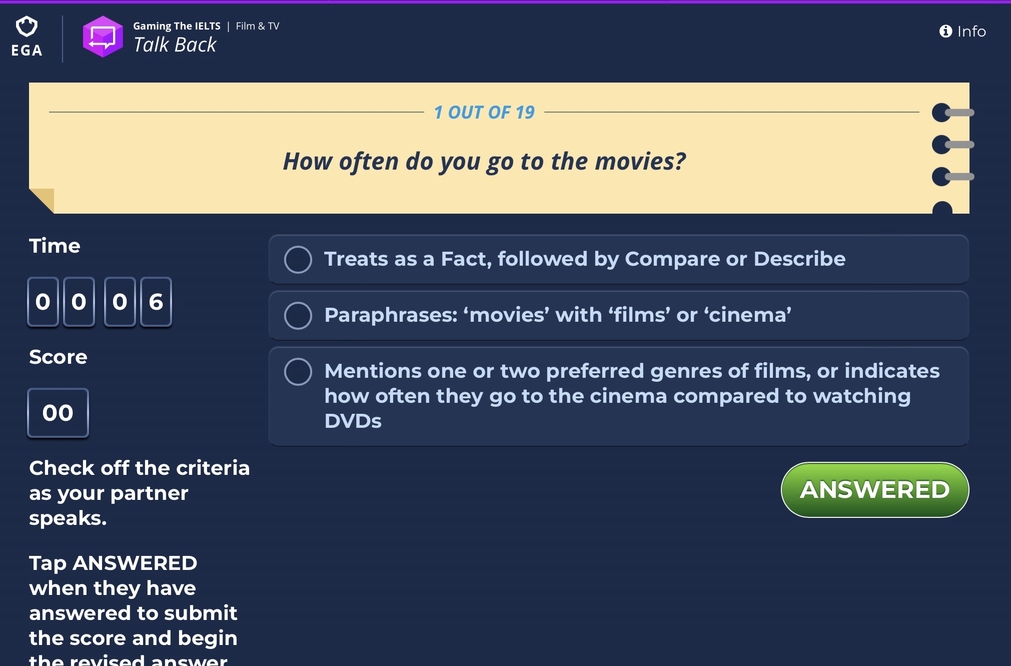
GTI Web App
The online resource and skill-building site Gaming the IELTS is divided into 20 units, 10 at the Intermediate and 10 at the Advanced level.
Access
-
Students who enroll in private tutoring or who band together to form
their own budget classes for a 20, 40 or 60 hour course, will have
access to the entire GTI environment over the duration of the course.
This includes
- all Strategy lesson “Job Aid” notes
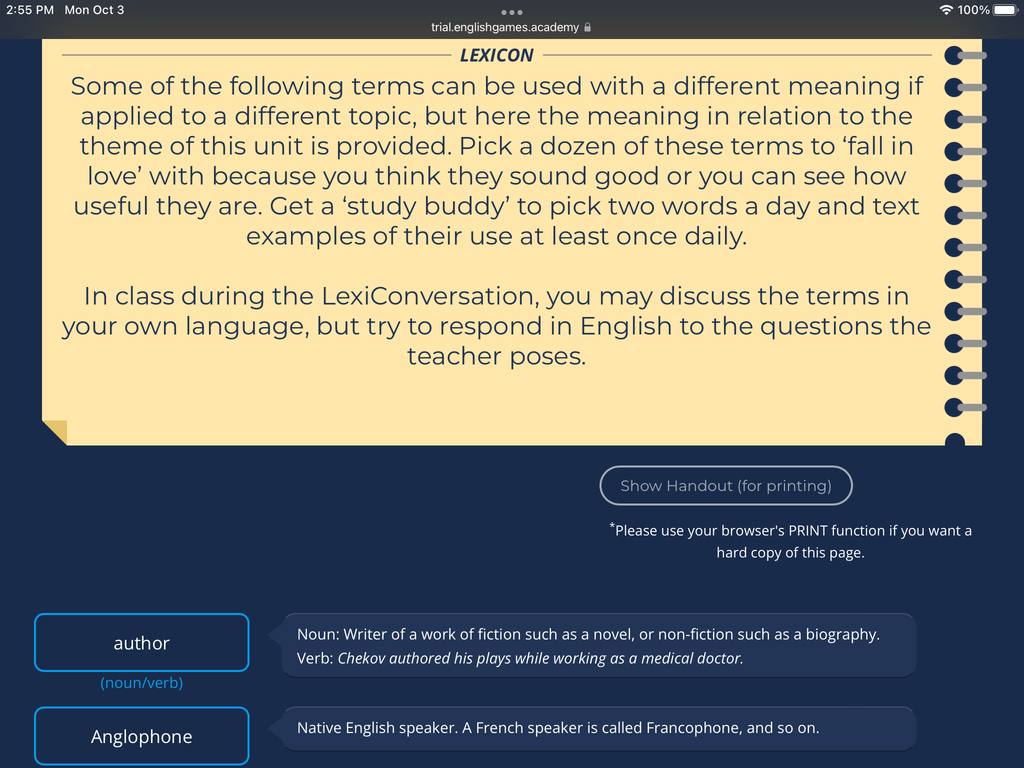
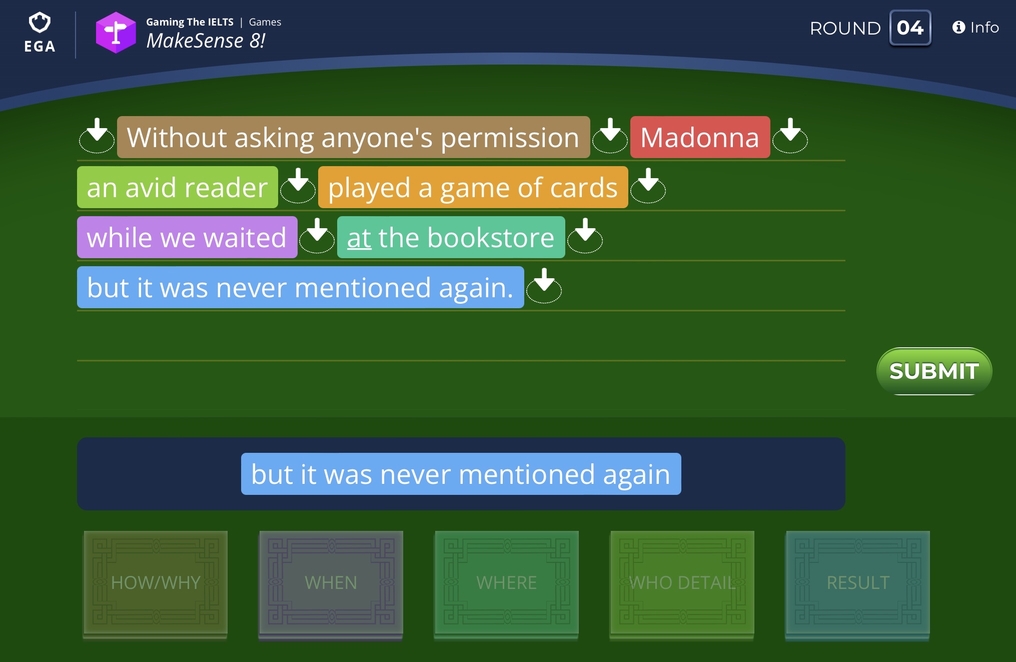
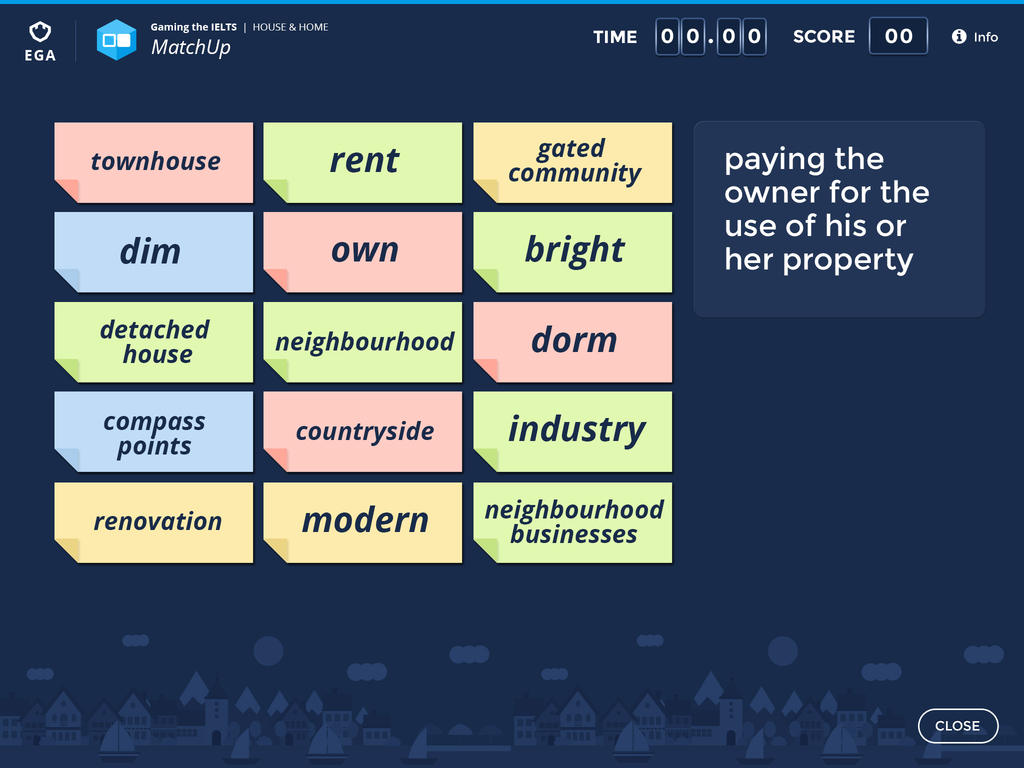
- all the lexicons, automatic feedback exercises and games
- all written and live feedback on all assignments they undertake
- Students purchasing Speaking or Writing packages will have full access to
- the lexicons (theme vocabularies)
- the associated puzzles and games that commit the lexicon words to memory.
- the job aids associated with the Strategy lesson.
ABOUT THE STRATEGY TOPICS
Classes range from 45 to 60 minutes.
- IELTS Myths What you may have been told and should not believe about the test
- The Writing Test – How It Is Scored You need to know how both the writing tests are scored in order to avoid behaviours that will earn you an ‘automatic 5’ in your Grammar and Task Response subscores.
- Analyzing a Task 2 Essay Question This lesson teaches you strategies to boost your Task Response and Cohesion & Coherence subscores, and determine how many paragraphs should be in your Task 2 essay and what should be in each.
- Observing & Imaging - Content Gathering for Essays This fun class exercises your ability to generate content. You know more than you think you know!
- Paraphrasing - Four Methods Paraphrasing is essential for all parts of the IELTS test: speaking, writing, listening, reading. There are more options than just finding words that mean the same thing.
- Sentence Variety - More is More! Many IELTS candidates make the mistake of thinking that the more fancy complex sentences you use, the better your score. Wrong. The greater the variety of your sentences, the higher your Grammar score.
- The Speaking Test - How Each Part Is Scored There are reasons for having three parts. The focus is different for each, which will help you develop control of the test.
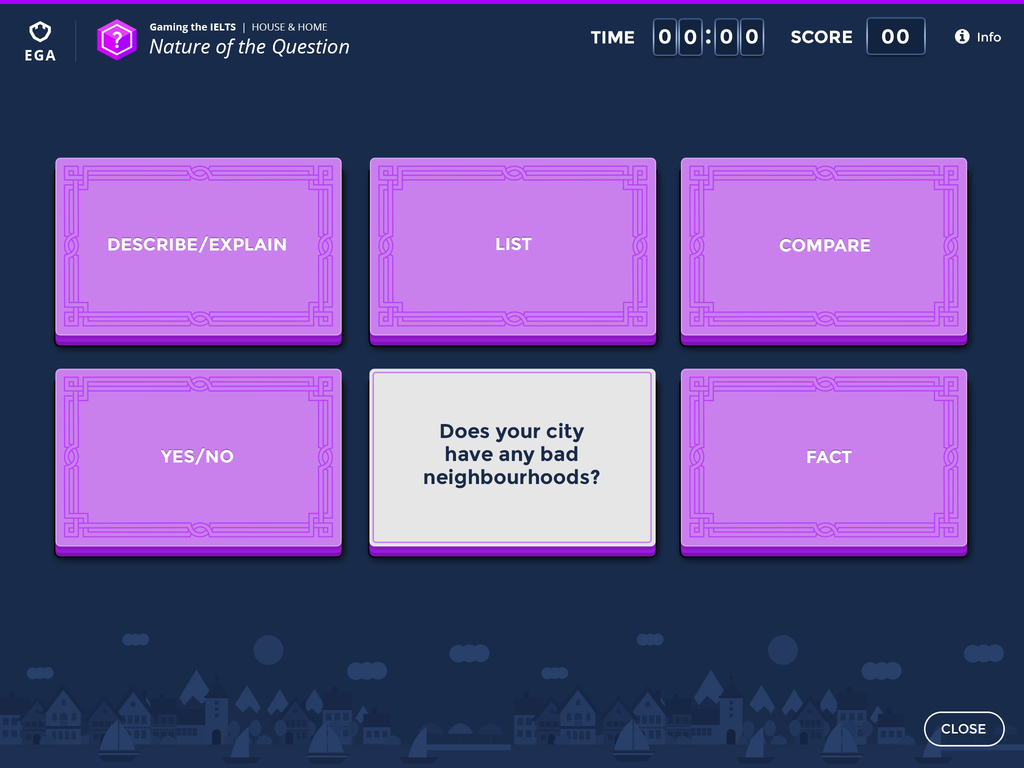
- Nature of the Question - Decode Oral Questions to Power Up Your Score Get the advantage of knowing the four major question types that repeat throughout Parts 1 and 3 of the speaking test.
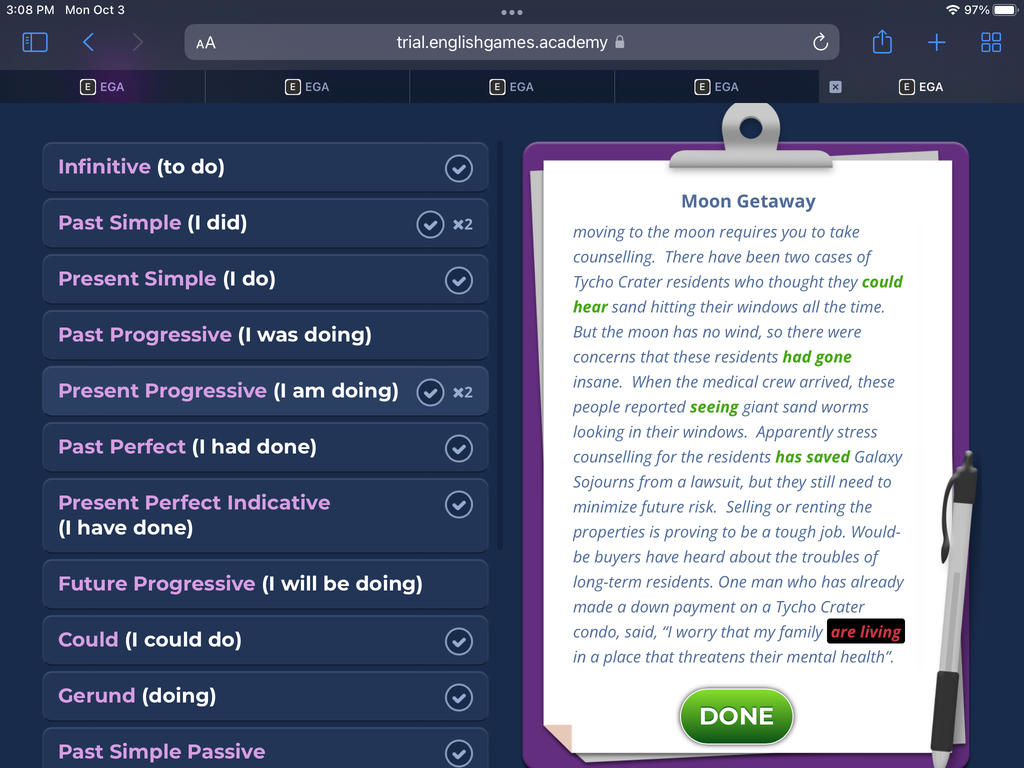
- Verb Tenses for the IELTS The proper use of Perfect Tenses and Passive Voice is what moves your score above a 6.
- Task 1 General A prescription for formal and informal letter-writing
- Task 1 Academic – Do The Math This lesson teaches you how to avoid “mechanical” Task 1 responses and a disappointing score of 5 for the Task Response subscore.
- Task 1 Academic – TablesHow to read a table, summarize the contents, highlight the points of interest and make comparisons. Prerequisite: Do the Math.
- Task 1 Academic – Pie Charts & Bar Graphs How to read a pie and bar chart, summarize the contents, highlight the points of interest and make comparisons. Prerequisite: Do the Math.
- Task 1 Academic – Line GraphsHow to approach describing the story a line graph tells, for a maximum score. Prerequisite: Do the Math.
- Task 1 Academic – Maps & PlansHow to get the most out of describing a map or plan, where the focus will be sequencing and verb tenses.
- Task 1 Academic – Flow Charts and Processes How to get the most out of describing a natural or manmade process (where the focus will be sequencing and verb tenses) and a flowchart (where the structure adds a choice of routes to the conclusion.